How to Choose the Right Packaging Box Structure: A Practical Guide
May 15, 2026
Packaging is often the first physical interaction a customer has with your brand. It needs to do more than just hold a product; it has to protect it, sell it, and create a memorable experience. While graphics and finishes get a lot of attention, the foundation of great packaging is the structure.
The right structure dictates durability, cost, and how your product feels in the hand. Here is a straightforward guide to help you navigate the options and pick the best fit for your brand.
1. Start with the Product, Not the Design
Before looking at box styles, you need to know exactly what you are protecting. A structure that works for a t-shirt will fail miserably with a ceramic mug. Be realistic about your product's physical demands.
Ask yourself the hard questions
| Weight & Density | Is it heavy? Does it need a double-wall corrugated board to prevent crushing? |
| Fragility | Does it need internal suspension or just a simple cushion? |
| Dimensions | Are there odd angles or protruding parts that require custom inserts? |
2. The "Unboxing" is Part of the Product
In the age of social media, the unboxing experience is a marketing channel in itself. The structure you choose dictates the rhythm of this experience.
| For Retail Shelves | A standard tuck-top box is efficient and familiar. |
| For Luxury | A magnetic closure or rigid box adds weight and ceremony. It tells the customer, "This is valuable." |
| For E-commerce | A mailer box is durable and easy to open without tools, reducing customer frustration.If a customer struggles to open your package or can't figure out how to close it, that friction negatively impacts their view of your brand. |
3. Align Structure with Brand Positioning
Your box is a silent salesperson. Its physical form should match the price point and personality of what's inside.
| Minimalist & Eco-Friendly | If your brand values sustainability, avoid over-engineering. A simple, well-fitted folding carton made of recycled material speaks louder than a complex, plastic-laden structure. |
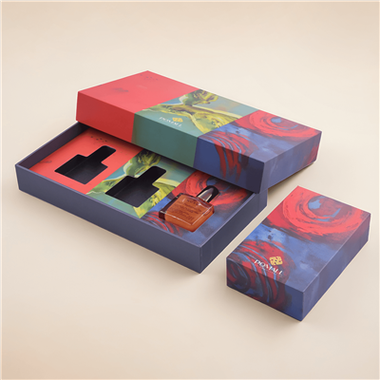
| High-End & Sophisticated | Luxury goods often benefit from telescoping boxes (lid and base) or drawer-style boxes. These structures feel substantial and permanent. |
4. Match the Material to the Mechanics
You cannot separate structure from material. The complexity of the fold depends on the paper or board you use.
| Corrugated Board | Best for shipping and heavy items. It's strong but has limited "foldability" for intricate shapes. |
| Paperboard (Cardstock) | Perfect for retail boxes (like cereal or cosmetics). It allows for crisp, complex folds and high-quality printing. |
| Rigid Board | Used for premium boxes (like iPhone packaging). It doesn't fold flat, which increases shipping costs but offers unmatched sturdiness. |
5. Be Realistic About Budget and Assembly
A stunning, complex structure is useless if it blows your budget or takes your team hours to assemble.
| Assembly Time | Does the box require manual folding and gluing? Auto-lock bottom boxes cost slightly more to manufacture but save significant labor costs during packing because they pop open instantly. |
| Shipping Air | Custom shapes can be beautiful, but if they don't stack efficiently on a pallet, you will pay a premium to ship "air." Always consider the logistics of the empty box as well as the filled one. |
6. Design for the End of Life
Sustainability is no longer optional; it is an expectation. The best structural design minimizes waste from the start.
Try to design structures that don't require mixed materials (like gluing plastic windows into paper boxes), as these are difficult to recycle. If possible, choose designs that can be flattened easily by the consumer, encouraging them to recycle rather than toss the box in the trash.
7. Common Structures at a Glance
Here is a quick breakdown of industry standards to help you visualize your options:
| Mailer Box | The e-commerce workhorse. Durable, self-locking, and great for branding the interior. |
| Folding Carton | The standard retail box. Lightweight, cost-effective, and versatile. |
| Rigid Box | The premium option. Thick, non-collapsible, and associated with high-value items like jewelry or tech |
| Sleeve and Tray | A two-piece structure where an inner tray slides into an outer sleeve. It offers a premium "reveal" moment. |
8. Prototype
Never go straight to mass production. Digital proofs look great on a screen but can fail in the hand.
Order physical samples. Drop test them. Assemble them yourself to see how long it takes. Put them on a shelf to see how they stand up. This testing phase is where you catch structural weaknesses and refine the user experience before committing to a full run.
Final Thoughts
Choosing a box structure is a balancing act between protection, aesthetics, and cost. By focusing on the specific needs of your product and the expectations of your customer, you can move beyond generic packaging and create something that truly adds value to your brand.